
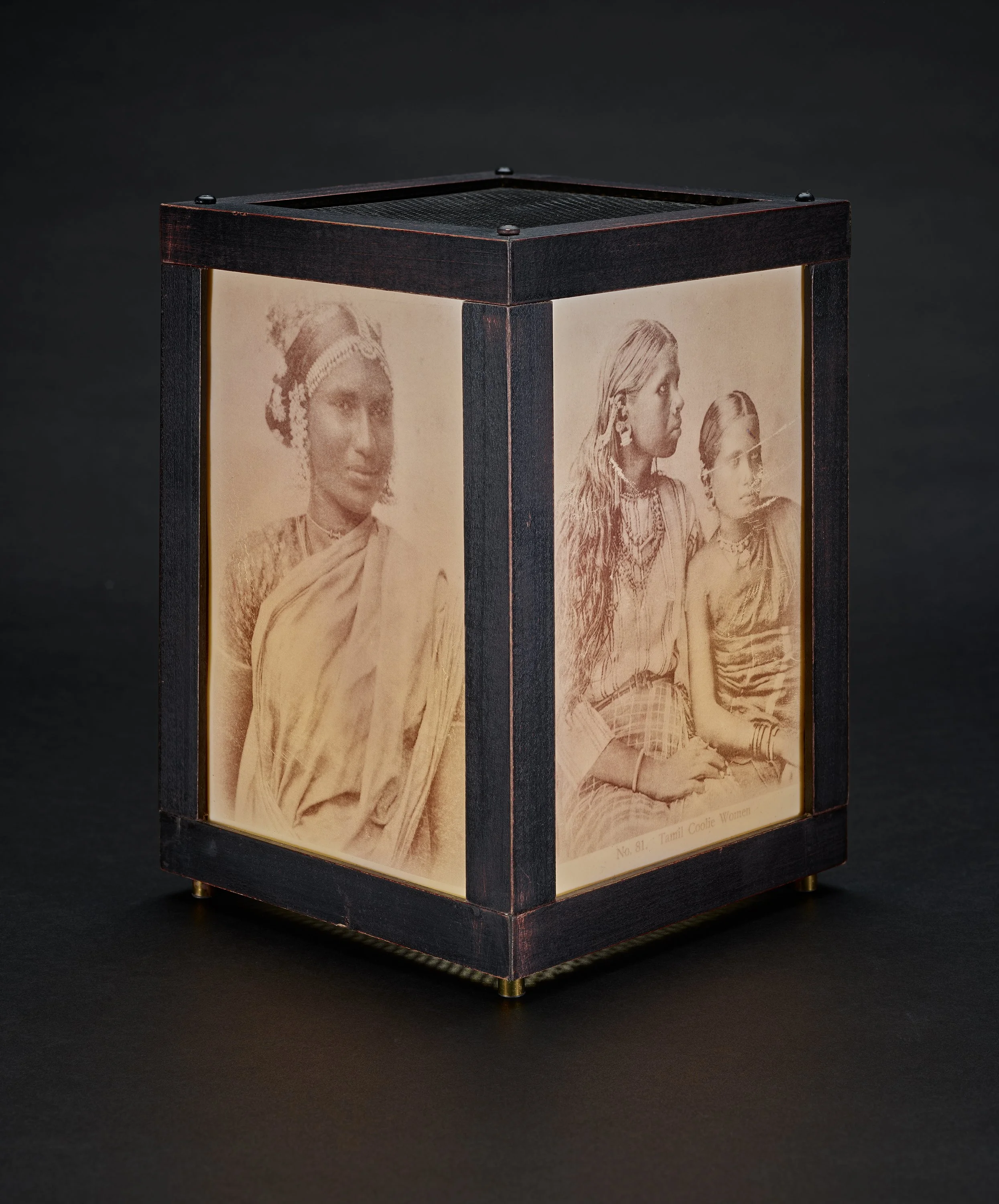
North America’s first exhibition on the Indian Ocean opens April 24, 2027, bringing together objects from the ROM’s collection, including my works First Wave and Illuminated that were acquired in 2024. Click here to read more about Indian Ocean: Monsoon Worlds on the ROM’s website.
These works are from my ‘Indentured Series’ that explores notions of archive and ancestry. After the British abolished slavery in 1833, a million Indians were exported to the colonies from 1838 to 1917 into indentured servitude. Half a million came by shipload to the Caribbean to work the sugar, cocoa and coffee plantations. They are often referred to as “the new slaves.”
Following the ideas of cultural theorist Arielle Azoulay, my work engages the socio-political landscape of my Indo-Caribbean ancestors, purposefully shedding light on the under-represented stories of Indo-Caribbean women.
The series commenced when I found a photograph of my great-great grandmother, Roonia, at the age of 105. Like most indentured women, Roonia, travelled alone. She was likely a young widow, prostitute, or otherwise fallen woman seeking a better life. The photograph shows a proud woman, laden with silver jewelry which the workers had fashioned out of the shilling/day they received for cutting the minimum two tons of sugarcane per day.
I ask the viewer to consider, acknowledge, and be inspired by these women, building bridges across the generations, genders, class, caste, race, migration and colonization.
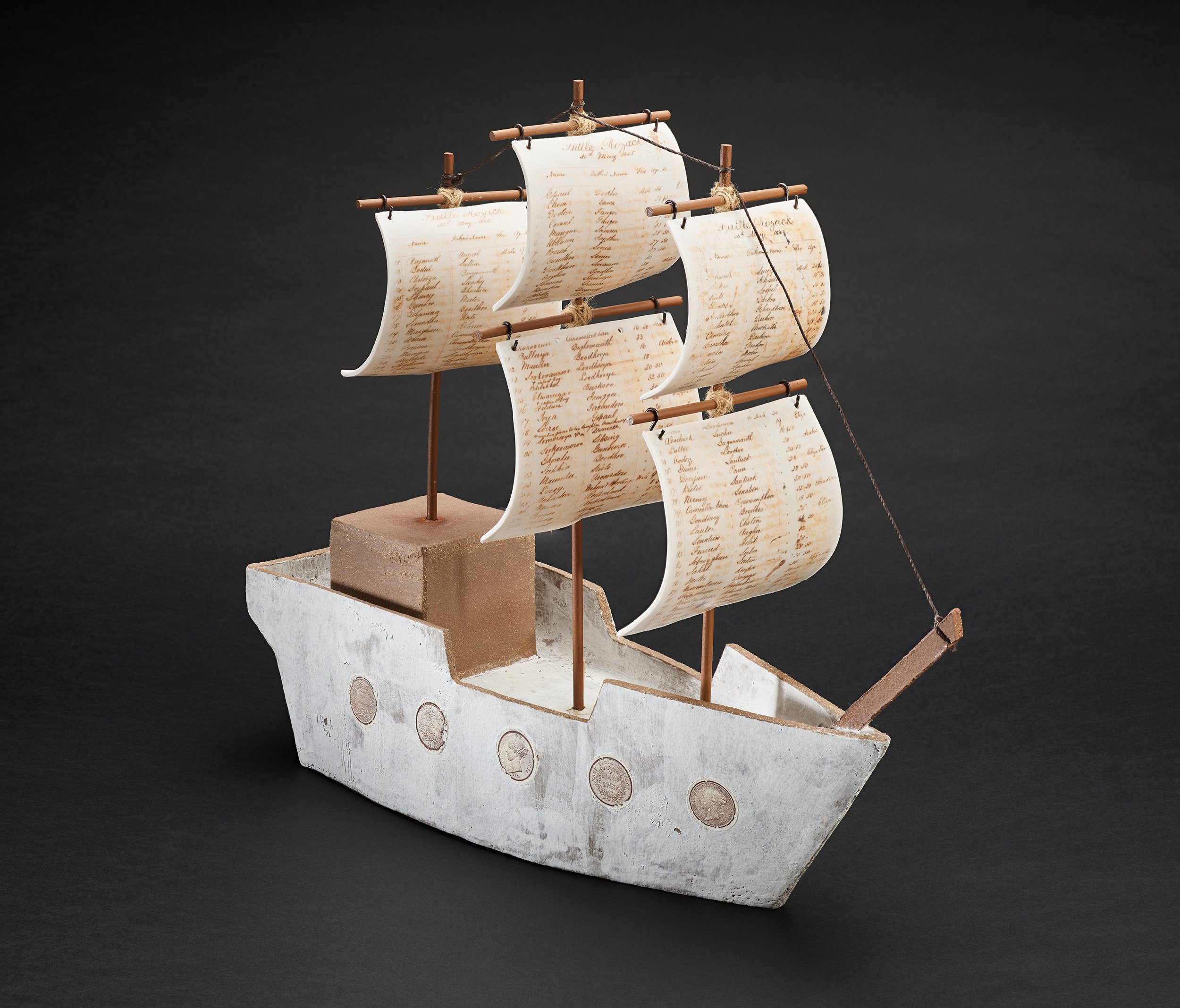
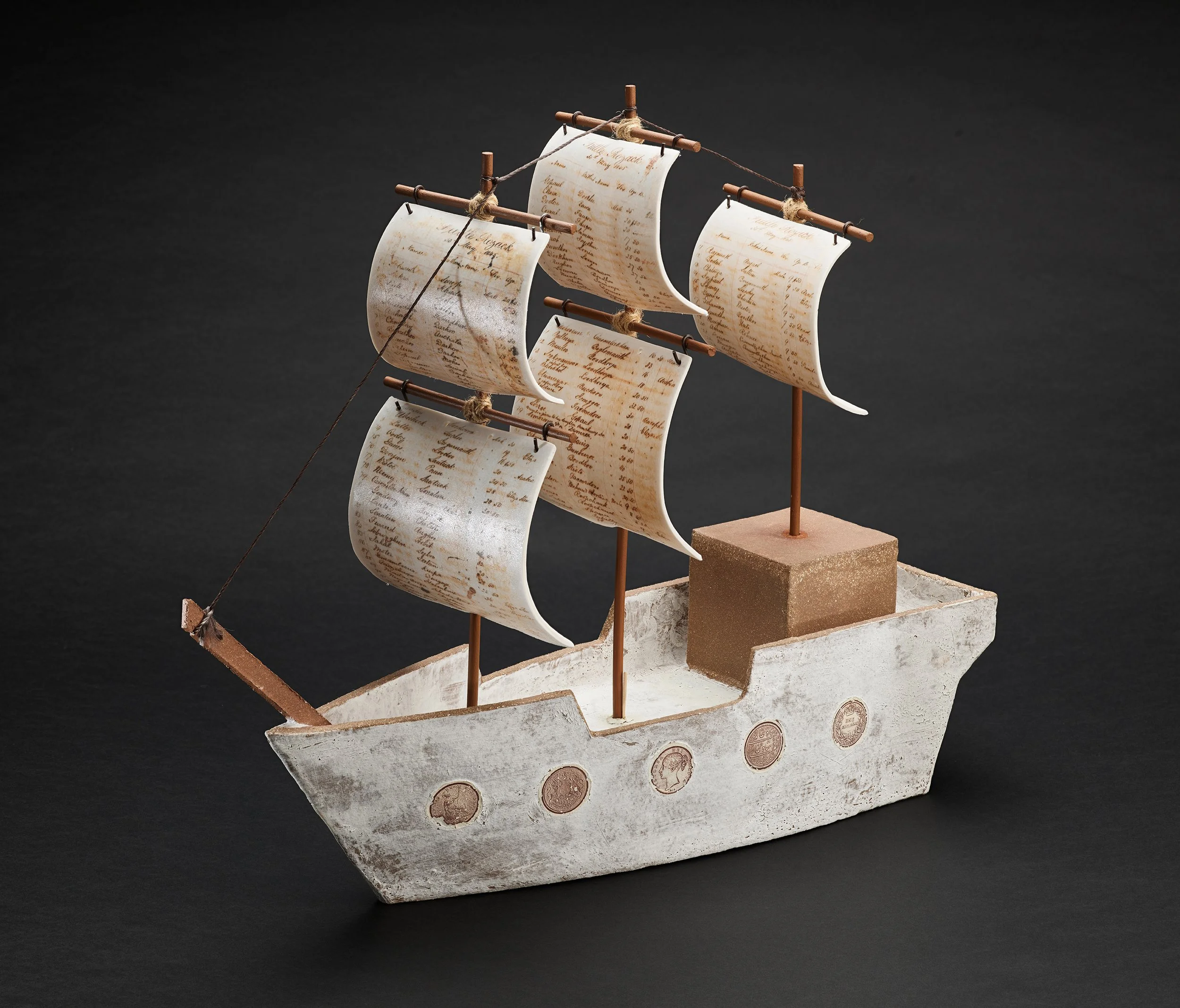
First Wave, 2021, Stoneware base with iron-oxide pigments printed on decals and fired onto handmade porcelain tiles with steel and painted wood fittings, 48 x 60 x 20 cm.
First Wave
First Wave represents the Fatel Rozack, the first ship that carried 222 Indians to Trinidad in 1845. The sails carry the images of the recently released archival manifest, the “portholes” are images of British and Indo-British coins from 1845.
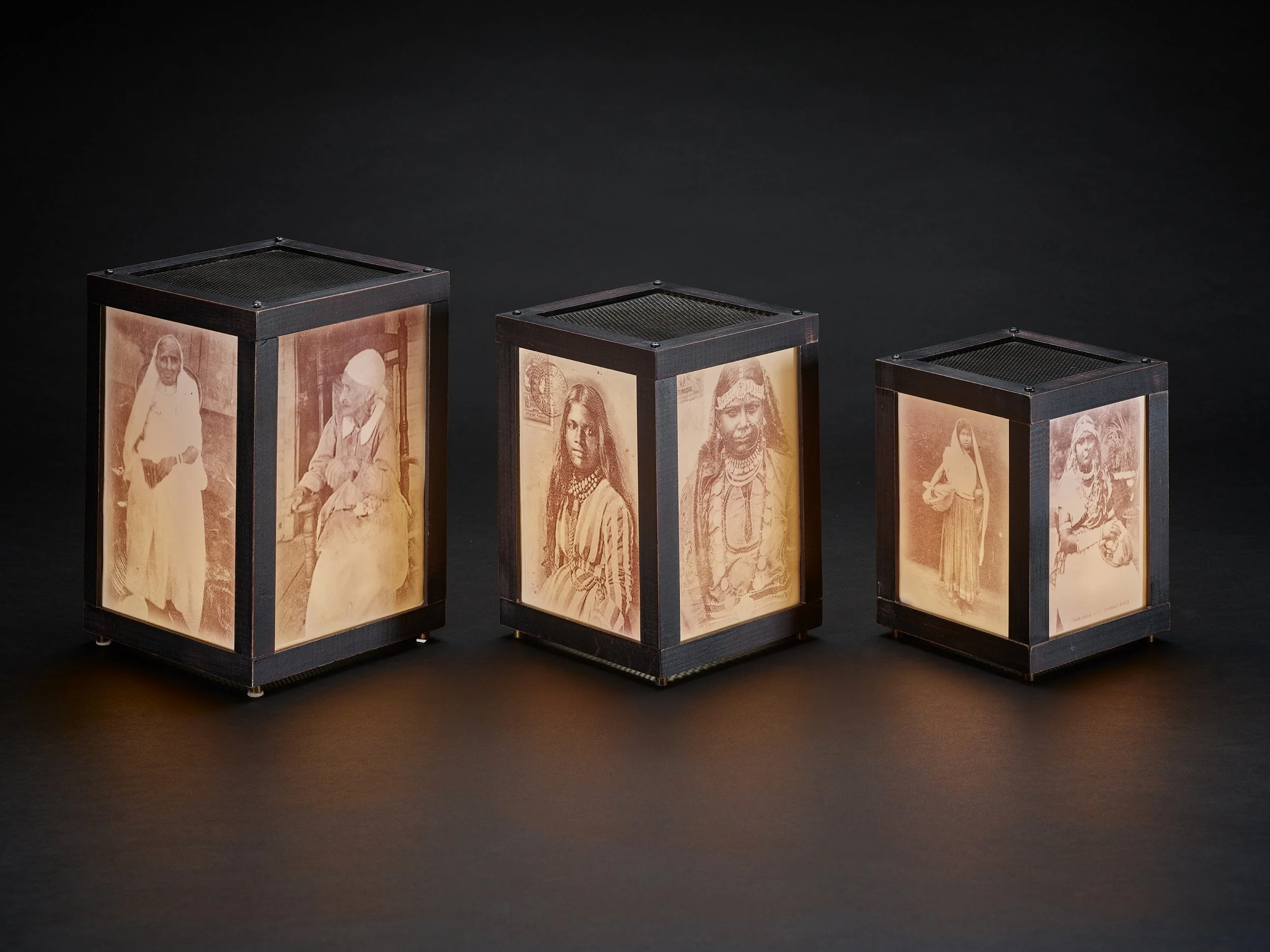
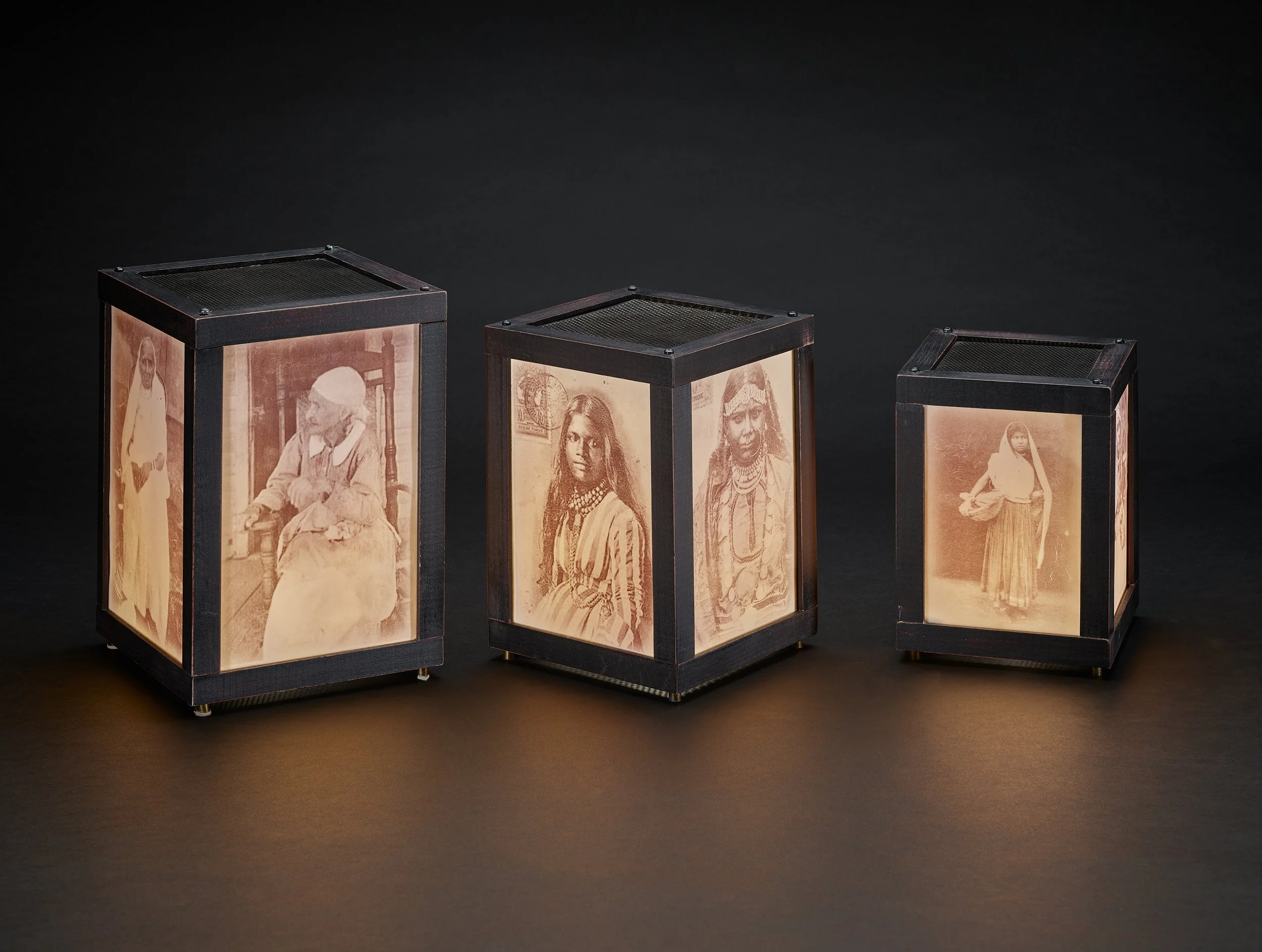
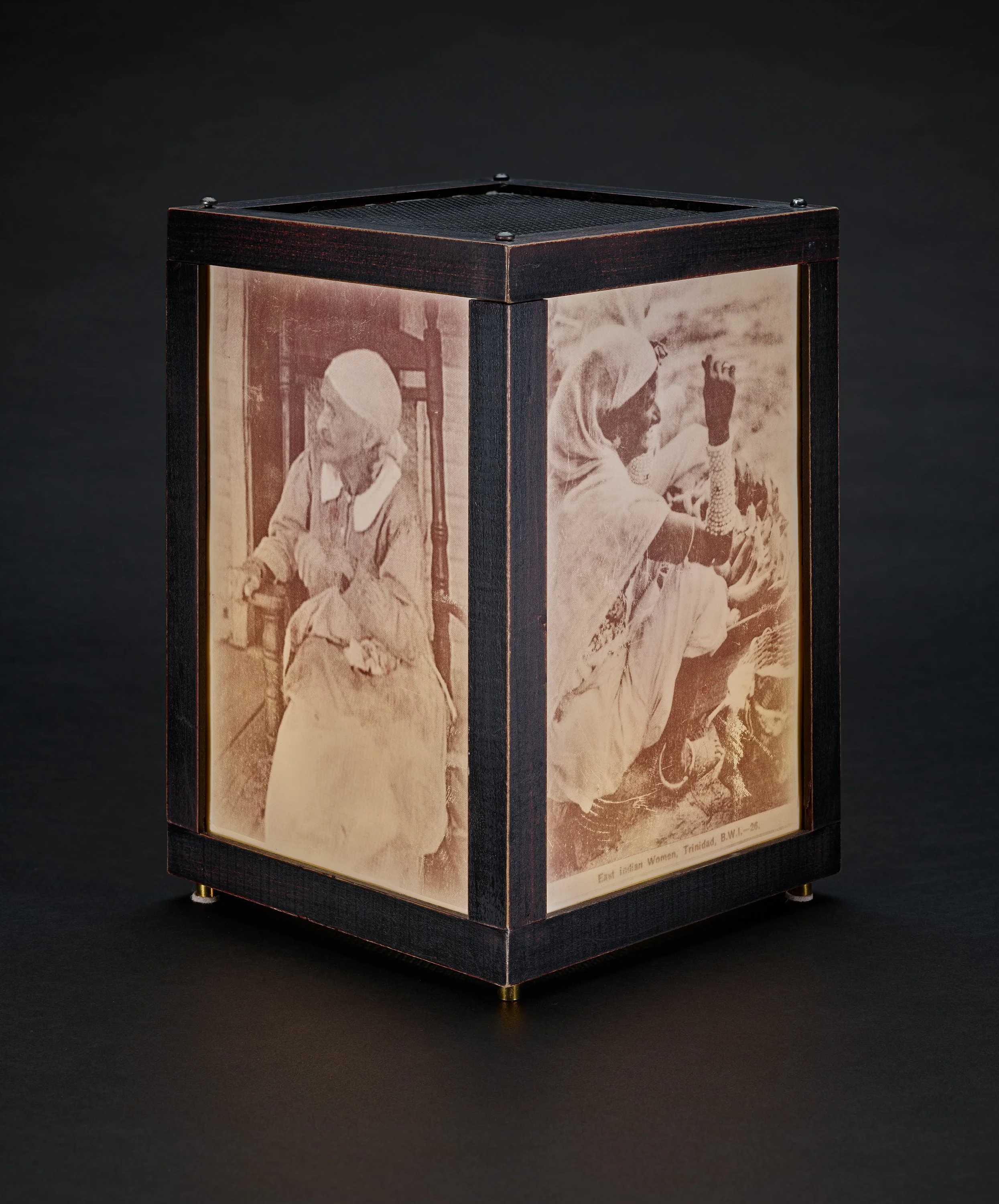
Illuminated, 2021, “Coolie Belles” postcards iron-oxide photographs fired onto porcelain, light boxes, porcelain, wood, metal, LED fixtures, size varies from 6” to 9”
Illuminated
The “coolie belle” portraits were shot on glass plates by male colonial photographers and hand-processed. The postcards were exoticized and commodified for Western tourists at the turn of the last century, hardships erased. My process of transferring portraits to ceramic tile is an act of both reclamation and decolonization.